Guide · Checked Against ssa.gov, October 2026
Social Security Office Security Rules: What to Expect
What Are the Security Rules at a Social Security Office?
Social Security office security follows federal law: you may be screened at the door, firearms and other dangerous weapons are banned under 18 U.S.C. 930, and conduct on protected federal property is governed by 6 CFR part 139. Once screening starts you have to finish it. Each building sets its own prohibited items list, so leave anything questionable at home. Find your office with the ZIP code office finder.
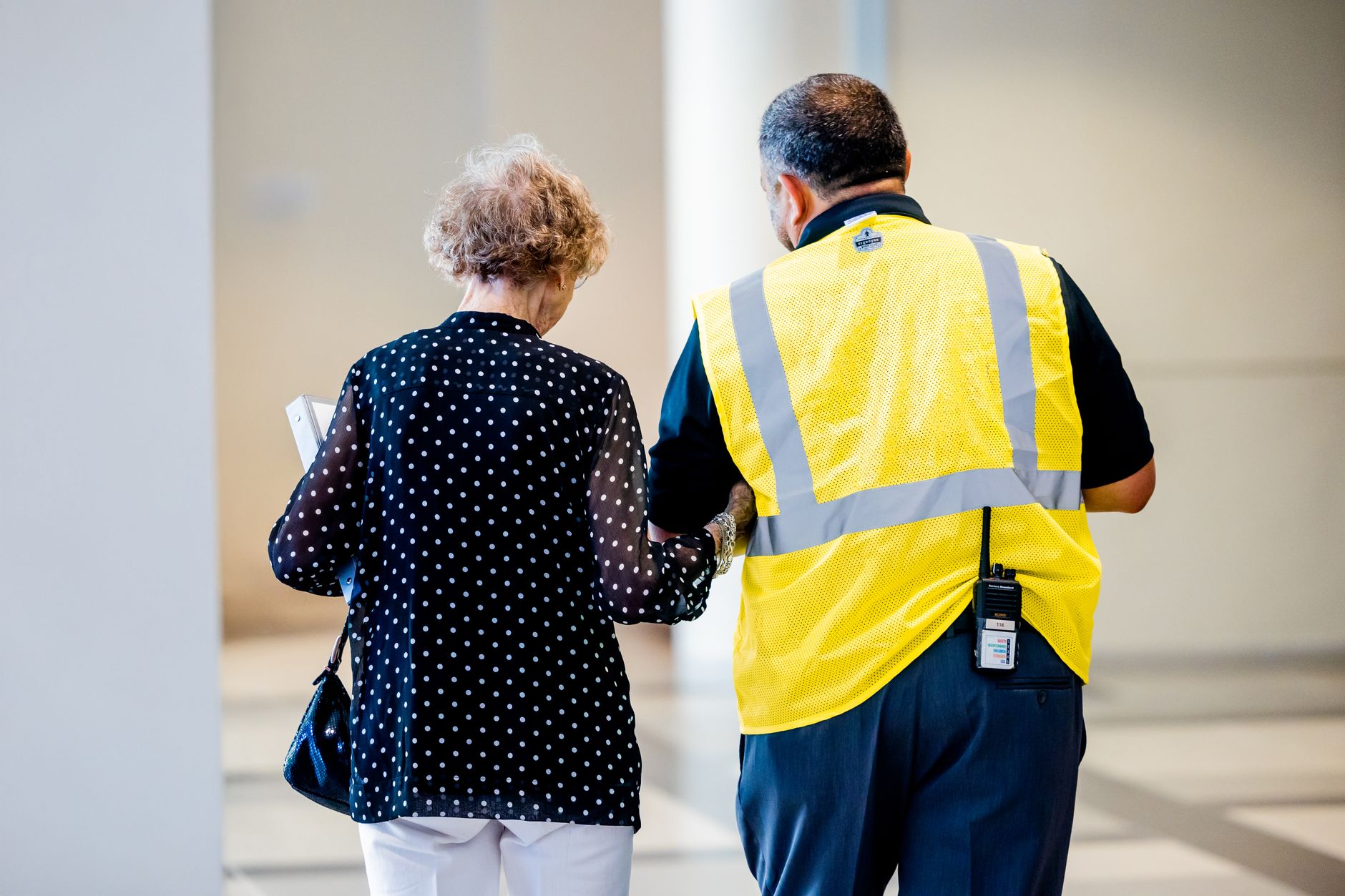
What Social Security Office Security Looks Like at the Door
Every Social Security field office, card center and hearing office is a federal facility. Under federal law that means any building, or part of one, that the government owns or leases and where federal employees regularly work. That status brings two sets of rules with it: the federal weapons law and the federal conduct rules. Both apply the moment you step onto the property, including the parking lot.
When you arrive, expect some or all of these:
- A posted notice. Federal law requires a notice of the weapons ban at each public entrance. The conduct rules also require an 11 by 14 inch sign listing them. If you aren’t sure what’s allowed, read the sign before you go in.
- A guard. The federal rule calls them security personnel. That includes Federal Protective Service (FPS) officers and Protective Security Officers, who are contract guards that screen people and bags for FPS.
- Screening. Where the building requires it, you walk through a metal detector and your bag goes through x-ray or gets a look by hand.
- A possible ID check. Whether you must show identification to get in is set by the building’s security committee, so it varies from office to office.
This guide covers the security side of a visit. For the documents SSA needs for your task, check the task page on ssa.gov before you go.
Which Federal Rules Apply
Two rules do most of the work.
The weapons law, 18 U.S.C. 930. Knowingly bringing a firearm or other dangerous weapon into a federal facility can bring a fine, up to a year in prison, or both. A “dangerous weapon” is anything used for, or readily capable of, causing death or serious injury. The law makes one plain exception: a pocketknife with a blade shorter than 2½ inches does not count.
The conduct rules, 6 CFR part 139. These are the Department of Homeland Security’s rules for federal property that FPS protects. They took effect November 5, 2025. They replaced the older General Services Administration rules at 41 CFR 102-74, which GSA removed as duplicates in January 2026. You may still see the old citation on signs and older web pages. The content is close, but part 139 is the current rule.
Breaking a part 139 rule can mean a fine and up to 30 days in jail. DHS puts the fine at up to $5,000.
On top of both rules, each building’s security committee writes its own prohibited items list. That list can ban items that are perfectly legal elsewhere. FPS gives sporting equipment such as baseball bats, hockey sticks and golf clubs as examples. If a building has no list, FPS uses the Interagency Security Committee’s standard list.
What You Can and Can’t Bring Through Security
The table below shows what the federal rules and FPS guidance say. The building’s own list can be stricter, so treat anything in the middle column as “leave it at home if you can.”
| Item | What the federal rules say | What to do |
|---|---|---|
| Firearms, any kind | Banned, openly or concealed, unless a narrow legal exception applies | Leave it at home. Not in the bag, not in a pocket. |
| Knives | A pocketknife under 2½ inches isn’t a “dangerous weapon”; anything larger can be | Leave knives behind; the building list may ban all blades |
| Explosives, incendiary items | Banned | Leave at home |
| Bats, clubs, sports gear | Allowed by law, but often on building lists | Leave in the car |
| Prescription medicine | Allowed when used as prescribed | Bring it in its labeled container |
| Illegal drugs, paraphernalia | Banned | Expect detention or arrest |
| Alcohol | No drinking, no open containers | Leave it in the car, sealed |
| Food and drinks | Allowed at most federal facilities; some don’t allow them | Bring a snack for a long wait if the office allows it |
| Phone, tablet, laptop | Allowed; goes through x-ray | Take it out when asked |
| Service animal | Allowed for a person with a disability; the animal is screened too | Bring it; a guard may ask if it’s needed because of a disability |
| Pets, emotional support animals | Not allowed; emotional support doesn’t count as a service task | Leave at home |
| Wheelchair, cane, walker | Allowed; screened by hand or wand | Use it as normal |
| Bike, scooter, skateboard | Can’t be ridden or stored on federal property except designated areas or when needed for a mobility impairment | Lock it off the property or in a marked rack |
| Cigarettes, vapes, tobacco | No use indoors or within 25 feet of doorways | Finish before you reach the entrance |
If a guard finds a legal item that’s on the building list, you’ll be asked to take it off the property before you can come in. An illegal item, such as a weapon or drugs, can lead to detention or arrest.
How Screening Works and Your Rights During It
Screening is quick when you’re ready for it. A few federal rules shape what happens:
- You decide before you start. Once you enter the screening area, the inspection runs until the guard finishes it. FPS says you can’t walk away halfway through, and refusing to finish can lead to detention or arrest.
- Everything you carry is checked. That includes bags, coats, and electronics, which go through x-ray.
- Children are screened too. An adult walks minor children, including infants, through the checkpoint. Strollers and carriers get checked.
- Guards can refuse entry. Security can deny admission to anyone who won’t follow the procedure, slows it down, or poses a threat.
Some visitors can ask for a different method. Tell the officer before you reach the detector if any of these apply:
- Pacemaker: you can ask for alternative screening, such as a hand wand or pat-down. Your bags still go through x-ray.
- Pregnancy: you won’t have to walk through the metal detector. The wand isn’t used on the abdomen.
- Prosthetic, cast or splint: you can skip the walk-through detector and be checked by hand or wand.
- Religious face covering: FPS offers identity checks in a private area and tries to provide a female screener when one is available.
If you need to carry an item that’s on the building list for a medical, disability or religious reason, ask the guard how to request an accommodation. The building’s security committee decides. If it says no, you can appeal to FPS on site or by phone at 1-877-437-7411.
For other help during a visit, such as interpreters or wheelchair access, see the interpreters and accessibility guide.
Photos, Recording and Phone Use Inside
People often ask whether they can film their visit. The federal rule on photography, 6 CFR 139.65, answers this directly:
- Outside the building: you may photograph or record the exterior from public spots such as sidewalks and streets, as long as you don’t block access.
- Public interior areas: entrances, lobbies and corridors may be photographed or recorded when it doesn’t disrupt anyone and no security order bans it.
- SSA’s own office space: recording inside space a federal agency occupies needs that agency’s express permission. For a Social Security office, that means the waiting room and service windows are off limits to cameras unless SSA staff say yes.
Phone calls are allowed in the sense that you can bring the phone. Keep it on silent. Loud noise counts as a nuisance under the conduct rules.
Conduct Rules While You Wait
Waits can be long and stressful, and the rules are strict about behavior. Under part 139 you must follow posted signs and the lawful directions of the guard. These are banned on federal property:
- Disorderly conduct, including fighting, threats, harassment or intimidation
- Loud or unusual noise or other nuisances
- Blocking entrances, lobbies, corridors or elevators
- Disrupting the screening process or other people’s ability to get government services
- Asking for money, selling things or handing out ads
- Handing out flyers in public areas without a permit from the building manager
- Wearing a disguise to avoid being identified while breaking a law
If you’re frustrated with a decision on your claim, a raised voice at the window won’t change it, and it can get you removed. The appeal process exists for that. The hearing offices and appeals guide explains each level and where your case goes.
Make the Visit Shorter
The less time you spend inside, the less security matters. SSA’s own Office Locator puts it simply: skip the line and make an appointment before you visit. The appointment guide shows how. Many tasks also work by phone or video, so check whether you need to visit an office at all first.
Use the right building. If you only need a new or replacement card or a personal information update, SSA sends you to a card center where one serves your area. There are 7 nationwide, such as the Brooklyn Social Security Card Center, open Monday to Friday, 7:00 AM to 4:00 PM, and the Orlando Social Security Card Center, open 9:00 AM to 4:00 PM. The card center guide lists them all.
Most field offices keep standard hours of Monday to Friday, 9:00 AM to 4:00 PM. Each office page shows its address, phone and the hearing office that handles its appeals. For example, the Denton office sends appeals to the Dallas (North) Hearing Office, and the Woodridge office sends them to the Oak Brook Hearing Office. Hearing offices are federal facilities too, so the same screening rules apply on hearing day. If your office has moved, the closed or moved office guide helps you find the new address. You can search all 1,231 offices from the home page.
Social Security Scams to Watch for
Scammers lean on the same authority a federal building carries. SSA says criminals pose as SSA or its Inspector General by phone, email, text, letter and social media, sometimes using a real employee’s name. SSA’s red flags include anyone who:
- Threatens arrest or legal action unless you pay right away
- Threatens to suspend your Social Security number
- Asks you to pay with gift cards, gold or silver, prepaid debit cards, wire transfers, cryptocurrency or mailed cash
- Offers to meet you in person to pick up cash or gold bars
- Texts or emails pictures of badges or official-looking papers
- Tells you to keep it secret or move your money to a “protected” account
Social Security never asks for sensitive personal information by social media, email or text. Federal employees never send photos of badges to demand payment. If a caller pressures you, hang up. Then report it to SSA’s Office of the Inspector General through the SSA scam page. If you want to talk to SSA itself, call the national number, 1-800-772-1213, or visit your own office in person.
Frequently Asked Questions
Can I Bring a Pocketknife Into a Social Security Office?
Federal law does not count a pocketknife with a blade under 2½ inches as a dangerous weapon. The building's own prohibited items list can still ban it, so the safest choice is to leave it in your car or at home.
Can I Leave if I Change My Mind During Screening?
No. The Federal Protective Service says you may not stop a screening once it has started, and refusing to finish it can lead to detention or arrest. Decide before you put your bag on the belt.
Do Children Have to Go Through Security?
Yes. Adults must walk minor children, including infants, through the screening point. Strollers and carriers can be checked by metal detector, x-ray, visual look or pat-down.
Can I Use My Phone Inside the Office?
You can bring a phone, and it goes through x-ray screening with your other electronics. Photos and recordings inside space SSA occupies need SSA's express permission, so keep the camera off while you wait.
What Happens if a Guard Turns Me Away?
If you were stopped for a legal item on the building's list, take it back to your car or home and return. If you missed your slot because of it, call the office or SSA at 1-800-772-1213 (TTY 1-800-325-0778) to rebook.
Does Social Security Ever Send Someone to Collect Money in Person?
SSA lists meeting you in person to pick up cash, gold bars or other assets as a scam tactic. Report any such request to the SSA Office of the Inspector General.
Keep Reading
- Make an AppointmentHow to schedule an office or phone appointment with SSA and what to have ready
- Video AppointmentsHow SSA meets people by video at partner sites, and who it suits
- Office Closed or MovedHow to find the office that serves you now after a closure, move or emergency closing
- Hearing Offices and AppealsThe appeal steps that lead to a hearing and how SSA's hearing offices work
- Card CentersWhat SSA's card centers handle, where they are and when to use a regular office
- Interpreters and AccessibilityFree interpreter services, sign language and accessibility help SSA provides
Sources
- eCFR: 6 CFR Part 139, Conduct on Federal Property
- GovInfo: 18 U.S.C. 930, Firearms and Dangerous Weapons in Federal Facilities
- DHS: FAQ Regarding Items Prohibited From Federal Property
- DHS: Visiting Federal Buildings
- Federal Register: GSA Removes Duplicative Conduct Rules (January 20, 2026)
- SSA: Protect Yourself From Social Security Scams
- SSA: Field Office Locator